Rehabilitation Options
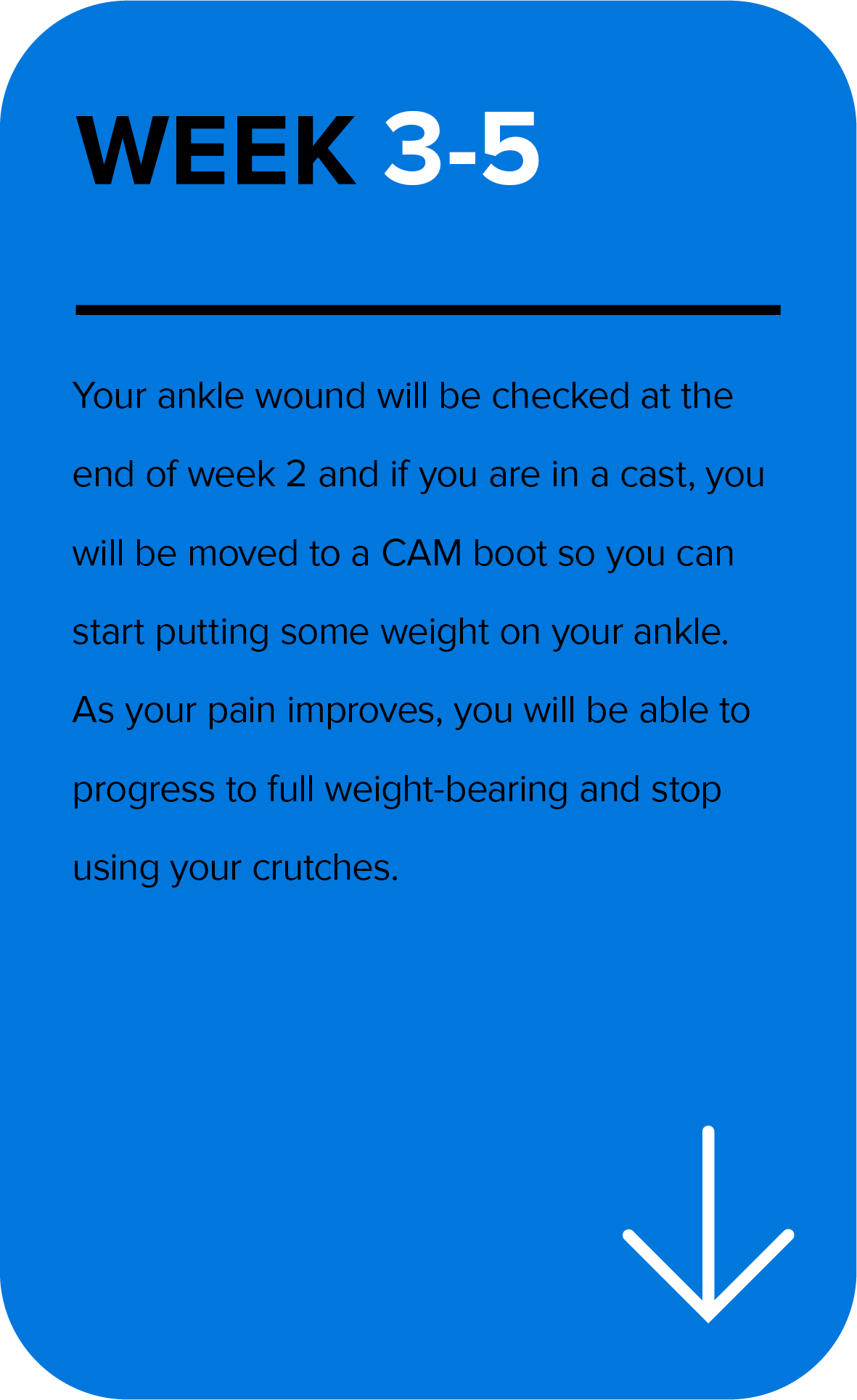
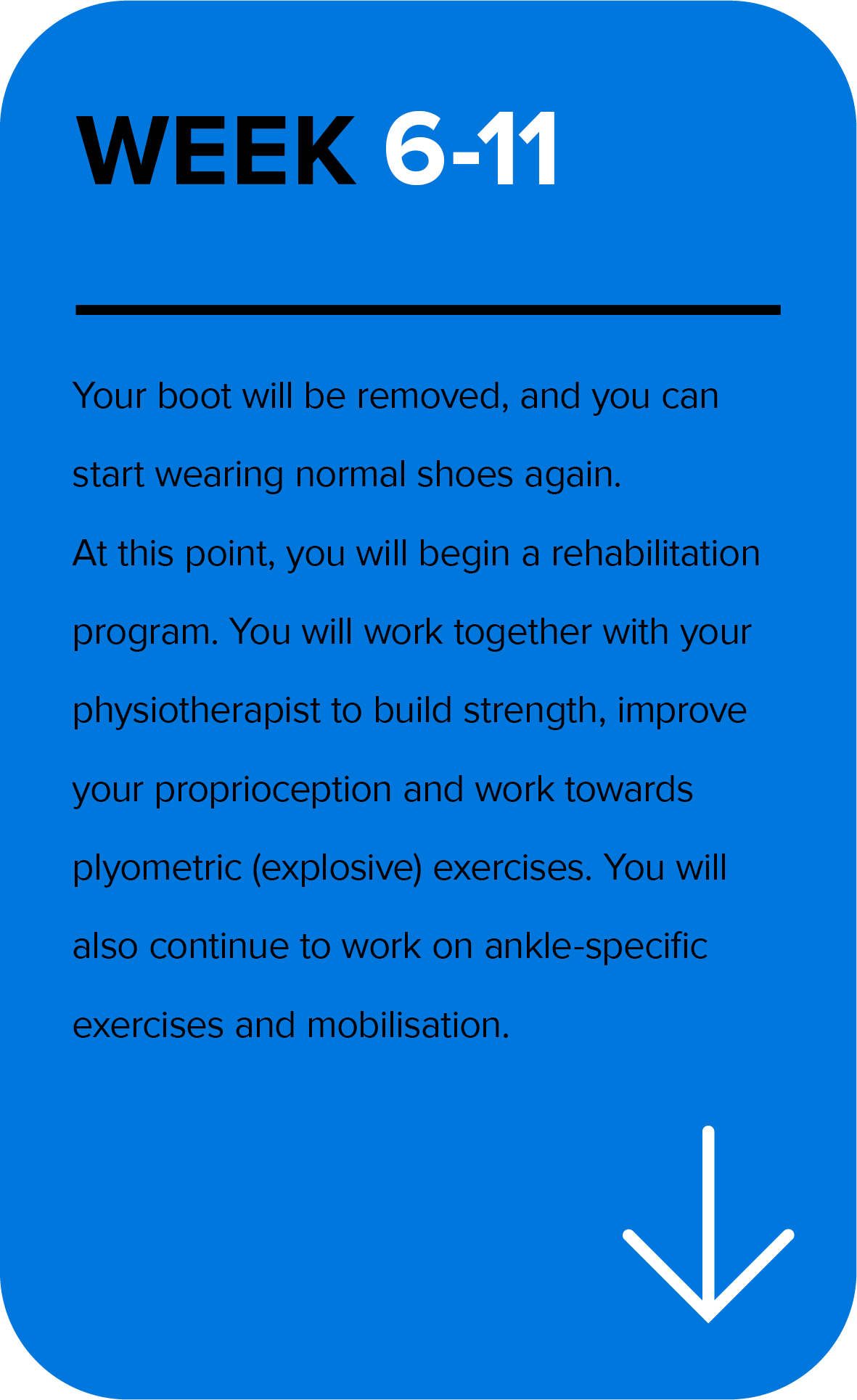
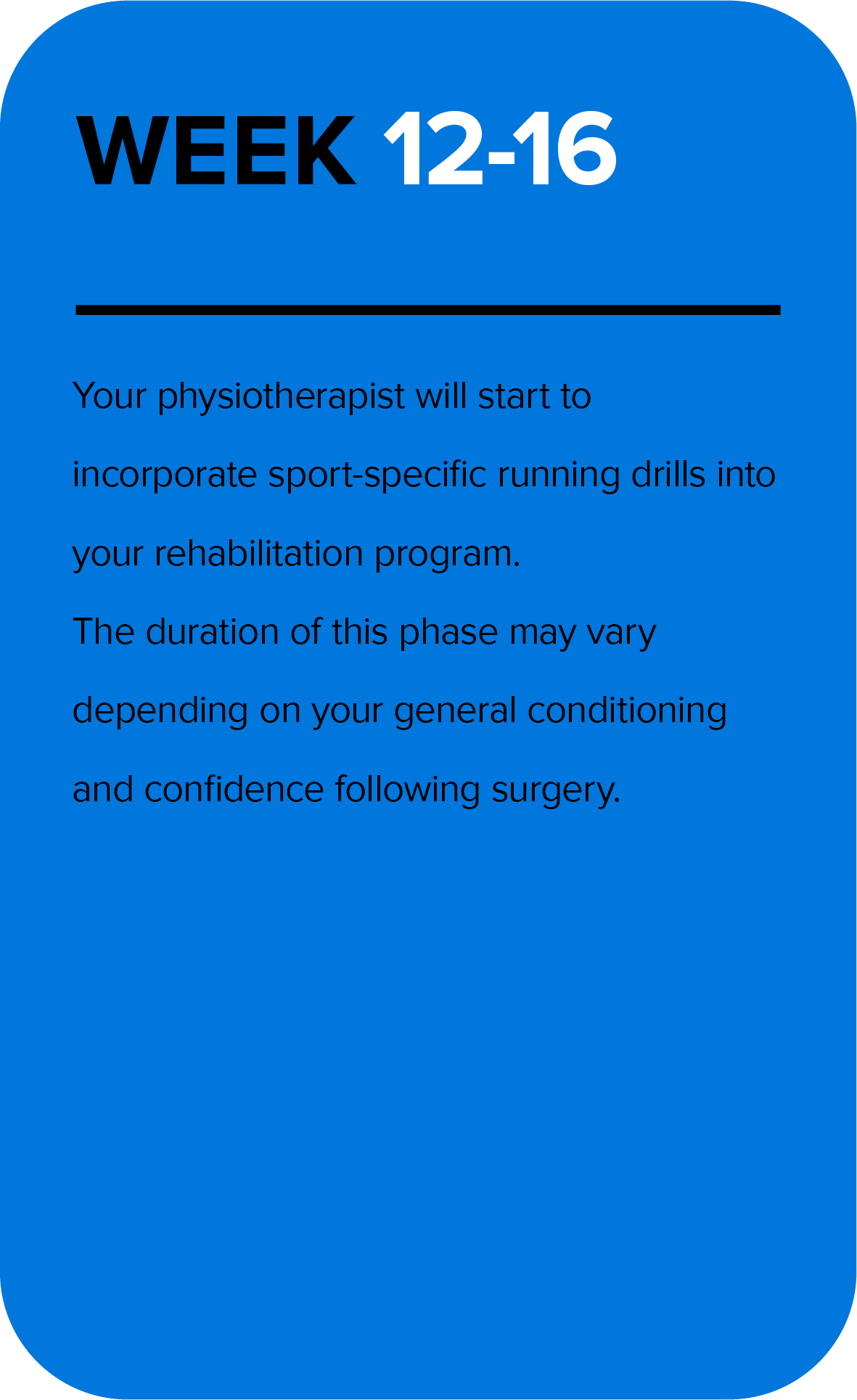
Every injury is different, and your rehabilitation plan will be tailored to suit you, but you can expect something like this:
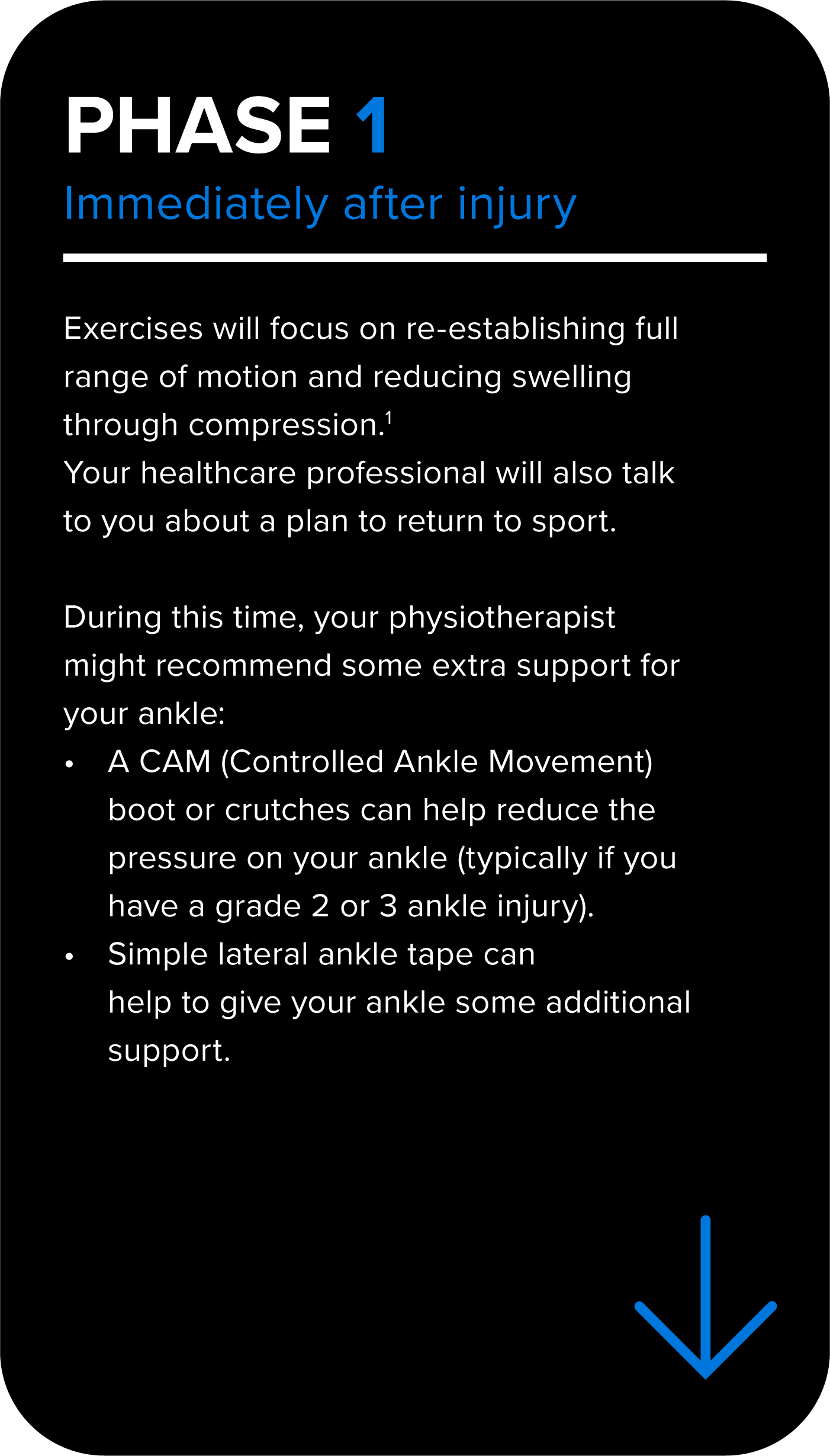
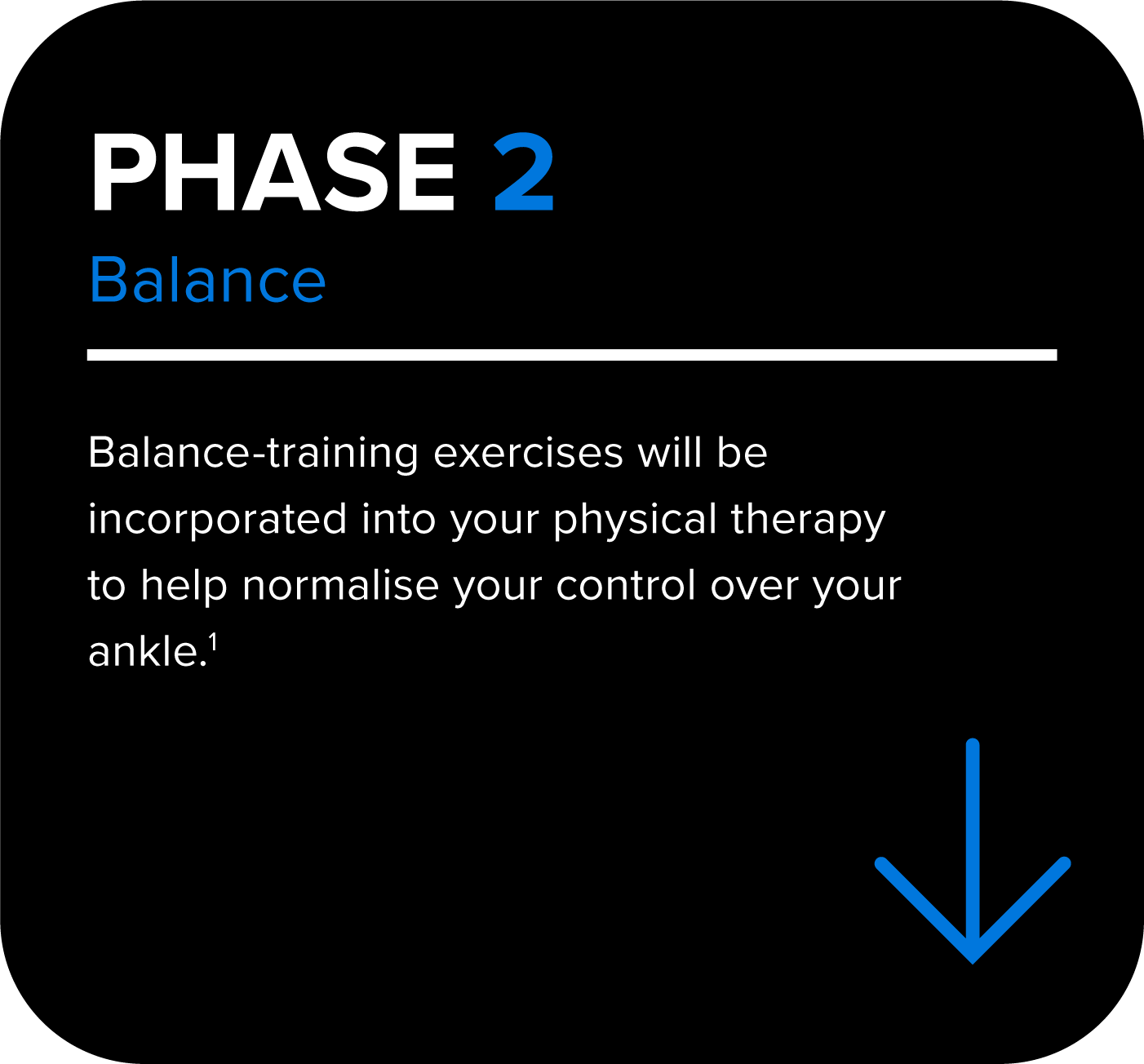
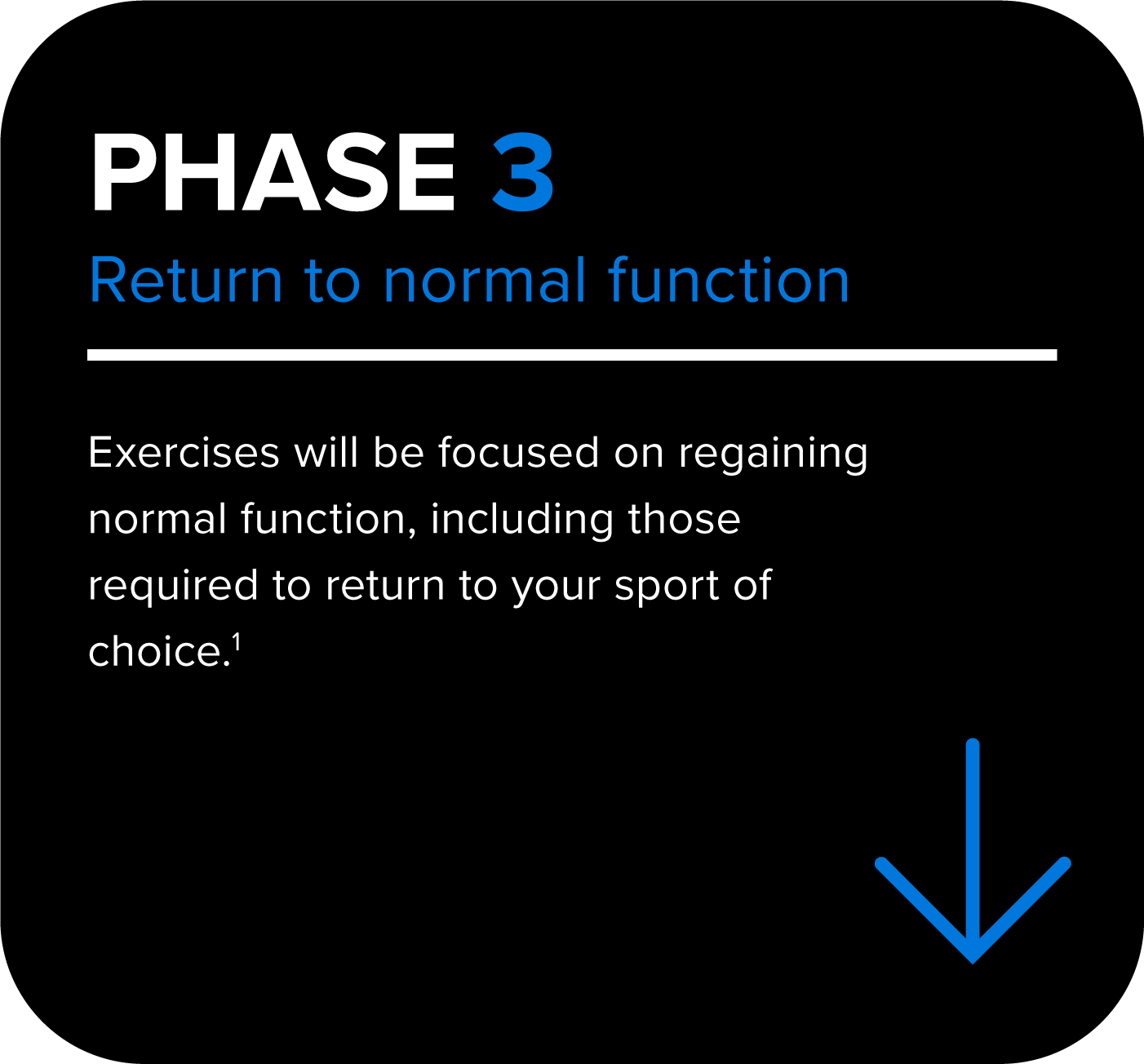
Tips from a physio for your ongoing recovery:
- Tape your ankle or wear a brace
- Incorporate plyometric exercises (explosive exercises such as squat jumps or burpees) into your training program
- Perform balance exercises every day. Try doing them while ordering a coffee. Or waiting for the bus. Simply stand on one leg and practice, practice, practice
- Ongoing strength exercises should be part of your training program
- Don't neglect your calf, foot and ankle muscles – they are just as important as your biceps
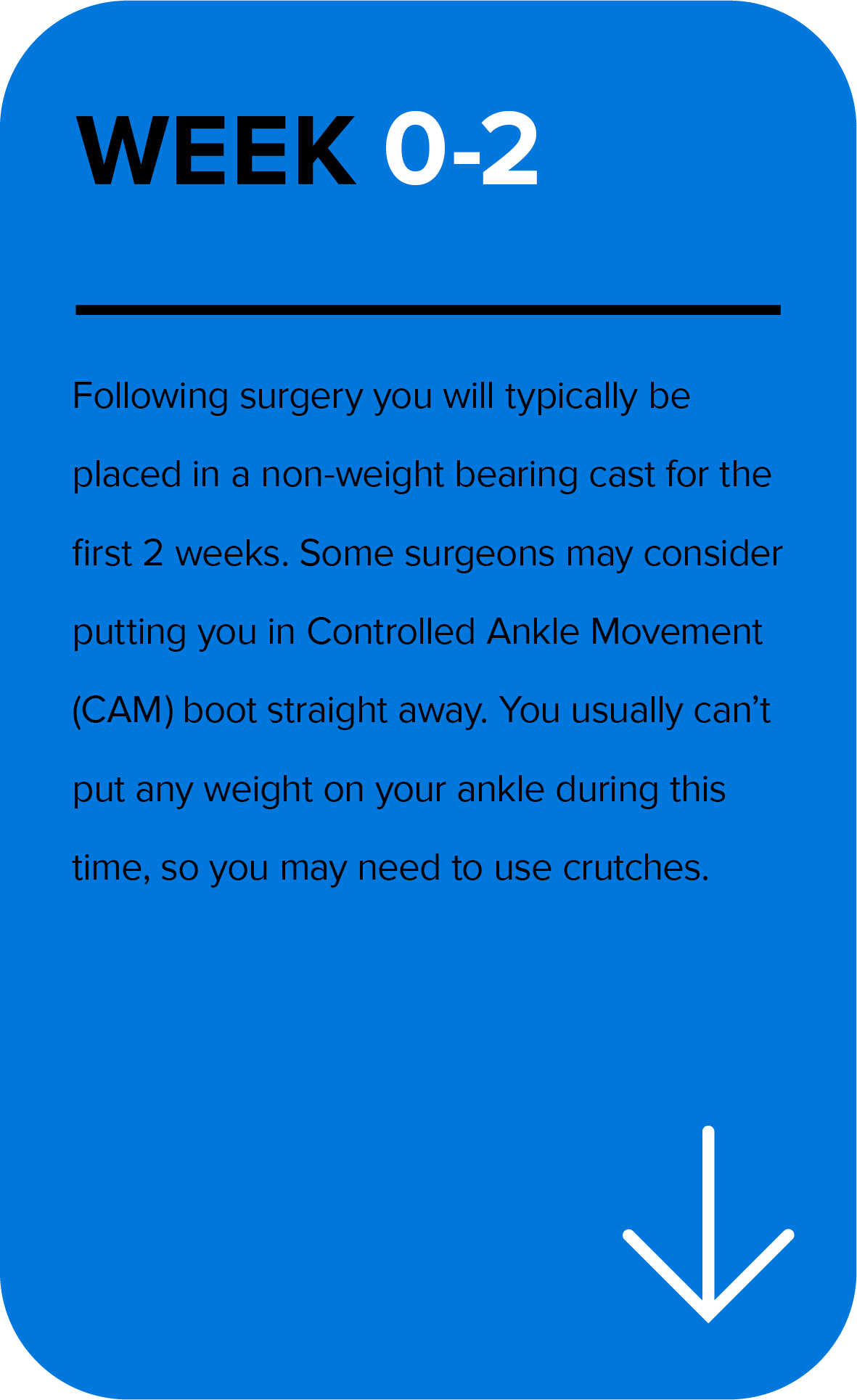
Your rehabilitation plan will depend on the extent of your injury and the type of surgery you have received. The postoperative regimen prescribed by your physician should be strictly followed to avoid adverse stresses applied to the device.
Signs you are Ready to Return to Sport
Your physiotherapist will talk you through their recommendations for when you can return to sport, but they may include:
Range of motion
Your range of motion for your injured ankle should be equal or very close to your unaffected ankle.

Pain
Pain is not always an indicator of when you can return to sport, however, it can be used as a guide. For example, if you experience pain during activities such as walking, a return to sport may not be advised.

Swelling
If a large amount of swelling occurs after activity, your physiotherapist may recommend delaying your return to sport and performing further assessment of your ankle.
Strength
Your injured ankle should be just as strong as the unaffected side. Your physiotherapist will assess this through simple methods such as single leg calf raises or even force-plate assessment if more in-depth data is required.

Program completion
To return to sport, you should complete a full return-to-sport program including a focus on strength, plyometric exercises (a form of exercise that uses fast, powerful movements to help improve your speed and power), balance, power and conditioning. Your physiotherapist may recommend you complete a return to sport assessment at the end of your physical therapy to ensure it is safe to return to sport. It will generally include strength, cardiovascular fitness, balance and running tests.
Staying Active During Ankle Rehabilitation
During the early rehabilitation stages (once the pain and swelling has settled) the stationary bike is often a good way to stay active without putting strain on your ankle. Talk to your physiotherapist to find out if this may be right for you.

Swimming may be a good way to exercise while you are recovering. If you have had surgery, make sure you speak with your physiotherapist or surgeon about when you can start. If swimming irritates your ankle, try swimming with your upper body only – put a pool noodle/floaty between your legs to stop yourself from kicking and swim with your arms only. Once your ankle pain settles, you can try swimming while kicking again.

Upper-body exercises are generally suitable for people with an ankle injury. If you would like to give them a try, speak with your physiotherapist about the best way to do them – they may recommend you start while seated or lying down.

Lower-body exercises with weight bearing may be suitable if done in a controlled manner. Your physiotherapist will talk to you about when you can incorporate them into your rehabilitation plan.

High-intensity interval training (HIIT) is not generally recommended during ankle recovery owing to the uncontrolled nature of the exercise.

Getting Back in the Game
Once a return to sport assessment has been successfully completed, you will work together with your physiotherapist and doctor to plan your return to sport. Your plan will be tailored to you and your goals for sport.

